
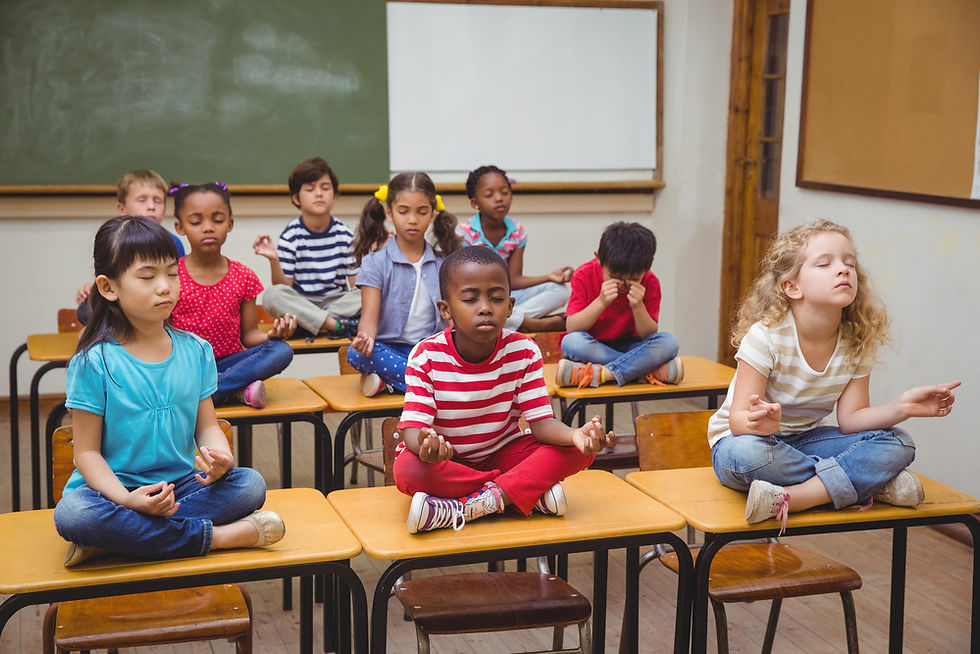
Creating Peaceful Minds in the Classroom
Implementing meditation into your daily classroom routines.
Research Conducted by Allysha Buch
Why Should Students Meditate?
Increases Cognitive Performance
Reduces Anxiety
Emotional Regulation
Relaxation Tool
Manages Focusing Skills
Helps Increase Confidence
Fun Fact
England just introduced mindfulness as a new subject in their schools
Click here to read more about it.
Ways You Can Introduce it Into Your Class
Mindfulness Meditation can be a great tool to use to refocus your students. There are many ways in which you can introduce this into your classroom to help your students benefit from it.
In my time as a student teacher, I have seen two different ways to incorporate meditation into the classroom. In my practicum last year, all of the religion classes in the high school I was teaching atdecided to have the students meditate for five minutes when they entered the classroom. This was a great way to refocus the students' minds from their last class, to the class they were entering.
That is why I chose to research the affects of meditation in my second year practicum, because I wanted to see if the affects would be the same in a younger grade level.
Techniques I Used

A Great Way to Introduce the Glitter
Jar
“Imagine that the glitter is like your thoughts when you’re stressed, mad or upset. See how they whirl around and make it really hard to see clearly? That’s why it’s so easy to make silly decisions when you’re upset – because you’re not thinking clearly. Don’t worry this is normal and it happens in all of us (yep, grownups too).
[Now put the jar down in front of them.]
Now watch what happens when you’re still for a couple of moments. Keep watching. See how the glitter starts to settle and the water clears? Your mind works the same way. When you’re calm for a little while, your thoughts start to settle and you start to see things much clearer”
Bee Breathing Techniques
This technique is where the students take a deep breath in through their noses, and when the exhale through their mouths they will make a buzzing or humming noise, like a bee.
If you are to use this technique, make sure to assess the maturity level of your students before introducing it into the classroom, as some students may find this funny rather than calming.
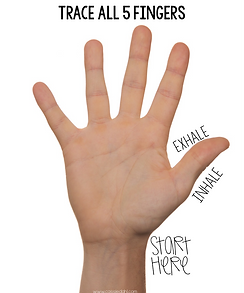
Five Finger Breathing
One technique that the students really loved to do was the five finger breathing. As shown in the picture to the left, with each breath you take you trace your hand with every inhale and exhale.
This is a technique that I saw many students use even when we weren't meditating to calm themselves down.
Relaxing/Calming Music
During the entire duration of this project, I found that the students didn't meditate the same way as they did when they listened to music.
That is why I recommend using peaceful music as a background to your classroom meditation.
Christian Mindfulness Meditation
I conducted this research in a Catholic school, and so I also used Christian meditation techniques as well. This website has sound tracks that include mantras, chants, and techniques to add faith into the daily meditation.
The Positive Results
As I began to research and add meditation to my classroom's daily routine, it instantly had positive affects on the class environment and the students' behaviour.

I like how we can have a little quiet time in class.
“
“
I decided to research the affects of meditation in the classroom because I knew what positive benefits it could have on someone, and I wanted to see if my grade 3/4 class would benefit from it as well.
The first few days were challenging, as most of the students found it hard to concentrate or not laugh at some of the meditating techniques I brought into the class. For example, some of the students found it hard to not laugh when doing the Bee breathing technique.
Once each students found a technique that worked best for them, I found that they were asking when we would be meditating, and they were starting to look forward to it.
Some of the positive affects I could see in the classroom included:
-
I could sense happiness and relaxation in them
-
The positive progression from the first day to the last day
-
Some students asked for more ways they could meditate at home
-
Certain meditation techniques were being used during other class subjects as a way to calm themselves down during stressful times.
Research Conducted
For the duration of two weeks I had my Grade 3 and 4 class meditate every day for 2-5 minutes.
At the beginning of the meditation I made sure that the students were in a comfortable position, hands on their knees and feet flat on the floor. For the students who could not reach the floor with their feet, they were able to sit in flexible seating options.
Once they were comfortable, I explained the glitter jar to them and asked them at the start of every meditation if they wanted to add in a worry or fear they had for that day. I would then place it in a visible place and start the music. For each meditation that we did we found that having the relaxing music in the background was easier to calm down to. Each day I tried a different meditation technique with the students. During the final week I told the students that they could choose the technique that they liked the best to meditate with.
I found that all of the students began to look forward to the meditation, and some asked everyday when we would be meditating.
The only thing I would change about my research is the time of day I got the students to meditate. I could only have them meditate at the end of the day, because we had to save room for them to focus on their math, language, and science subjects first. It is hard to find the time to squeeze in meditation, but I believe that adding in even a single minute of meditation into a child's daily routine will help improve their academic and social lives.